


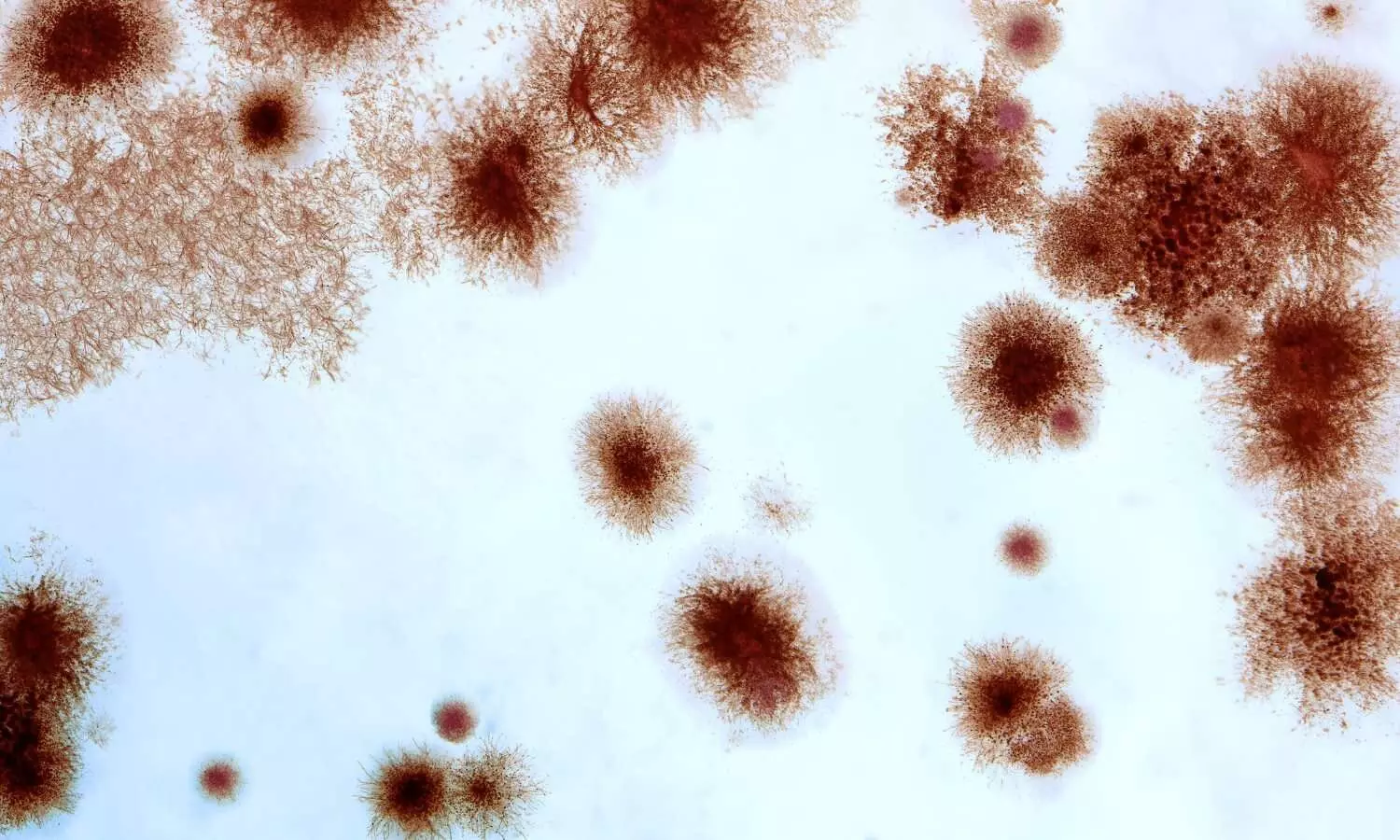
Certain seriousfungal infectionsoccur in regions of the United States with specific environments and are often tied to soil exposure. These infections can affect both healthy and immunocompromised people, but proper diagnosis remains slow, which delays treatment. The current gold standard for making a diagnosis relies on fungal culturing, which can take weeks, and tests that look for antigens, which lack specificity, or antibodies in the blood, which are often unreliable in early disease. But now researchers from Indiana University Health and the IU School of Medicine have developed a new molecular test capable of detecting three major pathogenic fungi at once-and with a much quicker turnaround than traditional methods. The work will be presented at the Association for Molecular Pathology (AMP) 2025 Annual Meeting & Expo, taking place Nov. 11–15 in Boston. Dr. Kenneth Gavina, Ph.D., is the director of clinical microbiology at Eskanazi Health in Indianapolis. He oversaw the project through the Indiana University School of Medicine. His team sought to identify three fungal infections that affect thousands of people each year, are often mistaken for otherrespiratory illnesses, and can be life-threatening, particularly in immunocompromised people: The researchers designed a multiplex real-time PCR test, which means it can detect multiple pathogens simultaneously from the same sample. Their test targeted three genetic regions that are unique to each fungus: ITS1 forHistoplasma, BAD1 forBlastomyces, and A2/PRA gene forCoccidioides. By detecting the fungi’s genetic material directly, the PCR test bypasses the slow culture process that is complicated by the fungi’s ability to switch between environmental and human forms. When they compared their PCR results to standard lab methods, the PCR test identified all tested samples with 100% accuracy. In addition, it was 100% specific, meaning it didn’t mistakenly detect other fungi or contaminants. The workflow also eliminates the need for time-consuming DNA-extraction steps, potentially reducing turnaround time and laboratory risk associated with handling live pathogenic fungi. “Our assay has the potential to significantly improve turnaround time and diagnostic confidence for infections that have historically been difficult to detect quickly,” Gavina said. Importantly, the team’s system runs on a platform already used in many clinical laboratories, making it potentially quite accessible. “While additional clinical validation is under way, this assay shows strong potential to fill a major gap in fungal diagnostics,” Gavina said. The assay has the ability to detect the three major causes of endemic mycoses in the United States directly from clinical specimens or be used as a form of definitive identification from fungal culture. “Clinicians currently have no FDA-approved molecular tests for these three pathogens, making rapid, reliable detection a pressing need.” New test could speed detection of three serious regional fungal infections, Association for Molecular Pathology, Meeting: Association for Molecular Pathology 2025 Annual Meeting & Expo.
Disclaimer: This website is designed for healthcare professionals and serves solely for informational purposes.
The content provided should not be interpreted as medical advice, diagnosis, treatment recommendations, prescriptions, or endorsements of specific medical practices. It is not a replacement for professional medical consultation or the expertise of a licensed healthcare provider.
Given the ever-evolving nature of medical science, we strive to keep our information accurate and up to date. However, we do not guarantee the completeness or accuracy of the content.
If you come across any inconsistencies, please reach out to us at
admin@doctornewsdaily.com.
We do not support or endorse medical opinions, treatments, or recommendations that contradict the advice of qualified healthcare professionals.
By using this website, you agree to our
Terms of Use,
Privacy Policy, and
Advertisement Policy.
For further details, please review our
Full Disclaimer.
0 Comments
Post a comment
No comments yet. Be the first to comment!